URBN
/ E-commerce/ Shopify
The Brief
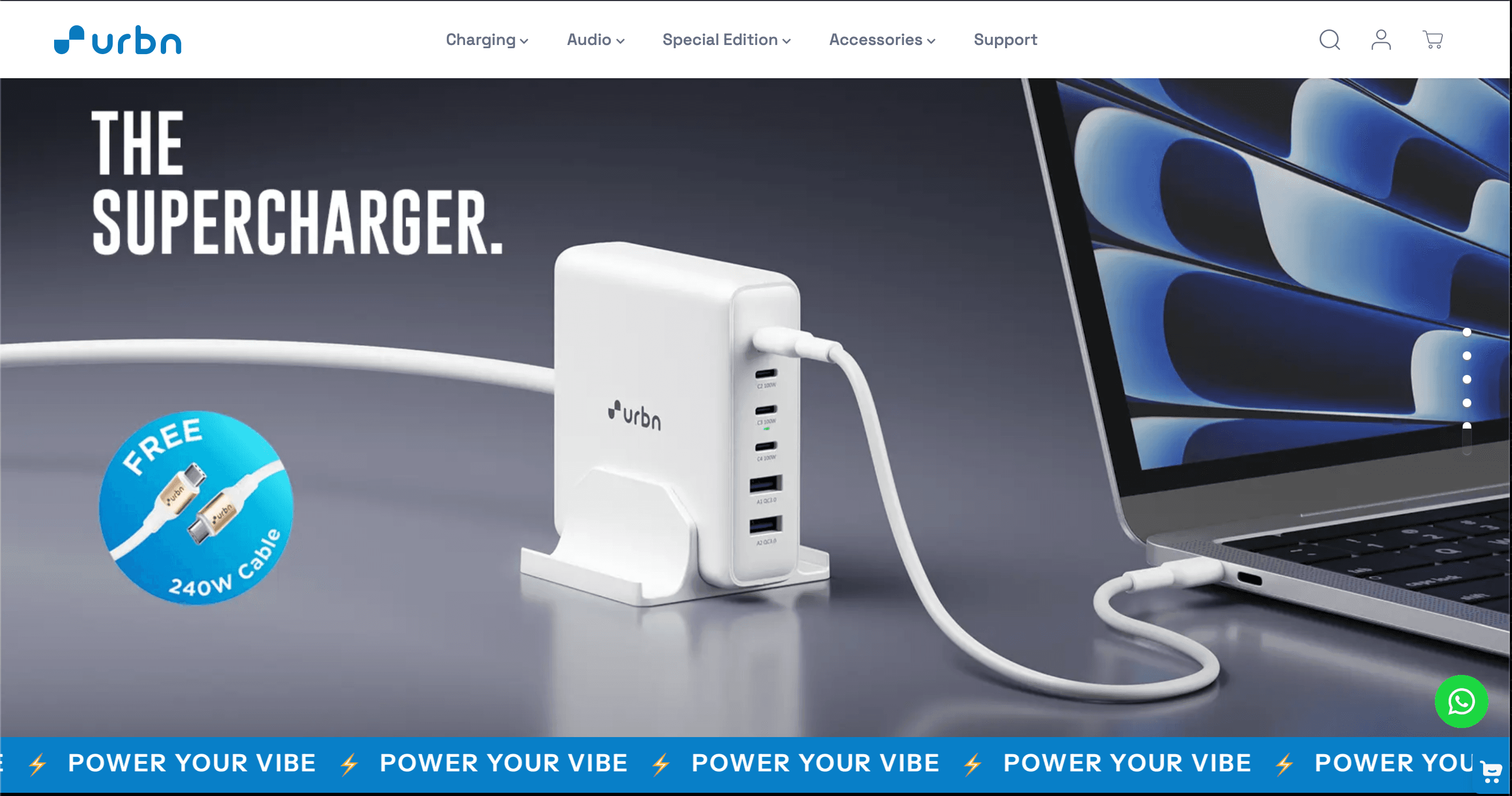
We were tasked to reimagine the digital presence of URBN, creating a platform that speaks to their core audience while pushing visual boundaries.
The Challenge
URBN sits in a deceptively hard category: power + charging.
Customers don’t browse for vibes — they come with constraints:
- wattage, ports, PD/QC compatibility
- device type (iPhone / Android / laptop)
- travel vs desk vs daily carry
- delivery speed + trust (returns, replacements, warranty)
The old experience was doing too much at once: products, specs, offers, support—everything fighting for attention.
We needed a storefront that feels premium and behaves like a precision tool.
The Solution
We rebuilt URBN World around one principle:
Clarity converts. Speed keeps it. Support retains it.
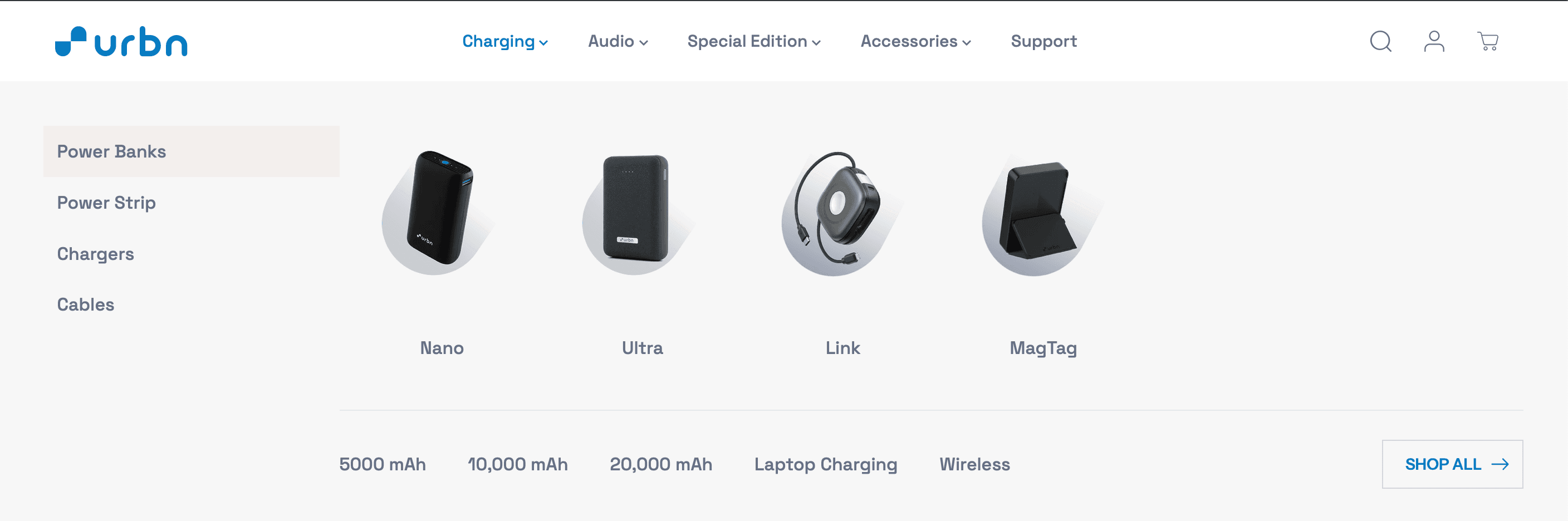
1) Navigation that matches how people actually shop power products
We structured the entire IA around real customer intent:
- Charging split into Power Banks / Power Strips / Chargers / Cables
- “series-first” grouping (Nano / Ultra / Link / MagTag) to reduce choice paralysis
- high-signal collection routes like capacities (5k/10k/20k), wireless, laptop charging
The result: fewer dead-ends, fewer “wrong product” refunds, cleaner path-to-cart.
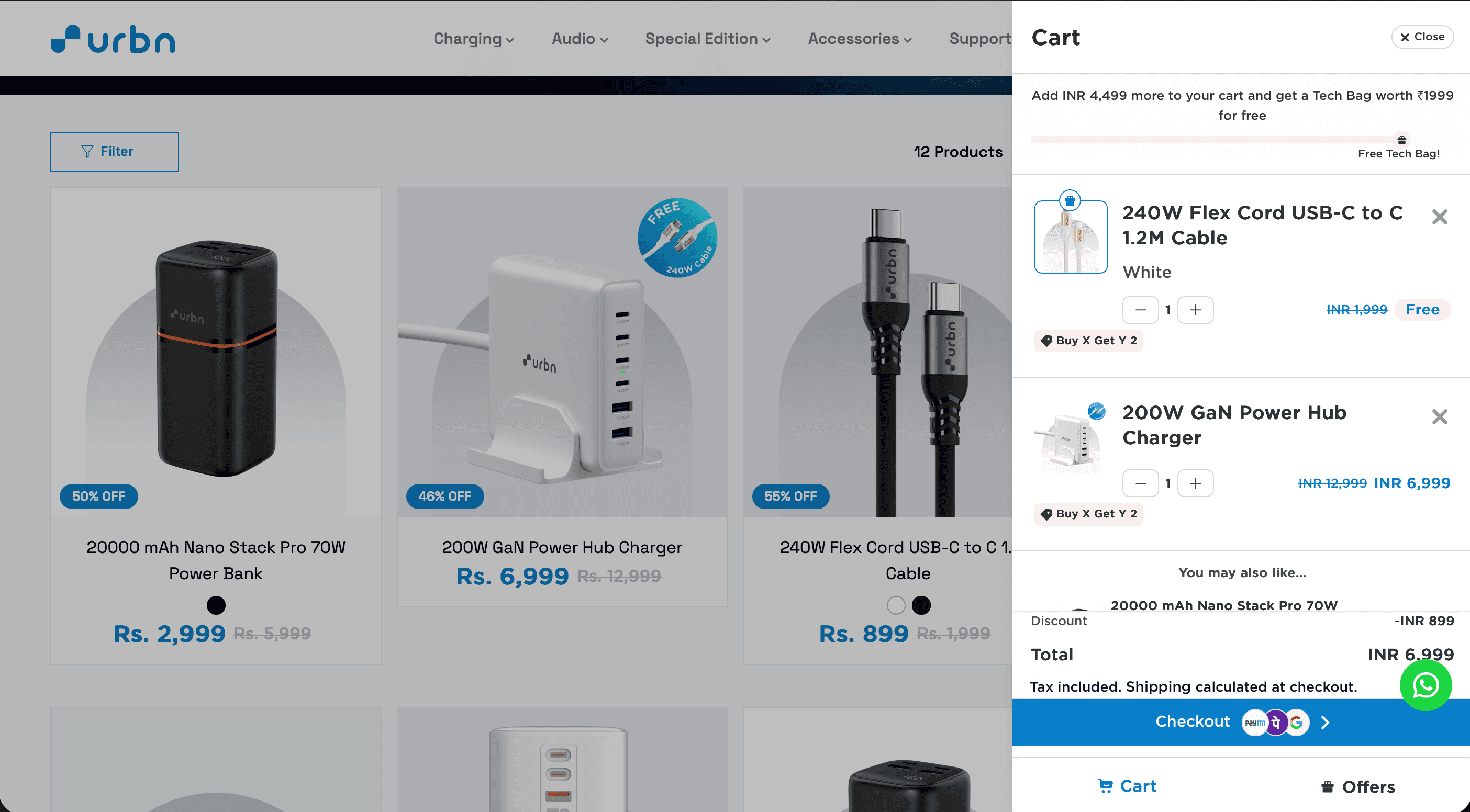
2) Collections built for high-intent filtering (not endless scrolling)
We treated collections as decision pages:
- device compatibility filters (Android/iPhone/Laptop/Wireless)
- clear pricing anchors (MRP vs offer price)
- quick-glance skims for power users
This is where most stores lose customers. We made it a conversion surface.
3) PDP template that sells specs without feeling like a datasheet
People buying chargers and power banks want details — but not chaos.
So we built a consistent PDP pattern:
- key benefits first (fast charge, compactness, safety)
- compatibility + use-cases (travel/commute/work)
- specs in a structured block (ports, wattage, capacity, outputs)
- trust modules: secure checkout, replacement warranty, support access
4) Offer UX that feels “exclusive,” not desperate
URBN uses cart-based offers (“add to unlock”).
We redesigned that mechanic so it feels like a premium perk:
- clear unlock thresholds
- minimal interruptions
- predictable reward behavior
Because if the offer feels confusing, it doesn’t boost AOV — it boosts exits.
5) Post-purchase experience: tracking + support + warranty as part of the product
Most Shopify stores treat support like a footer link.
We treated it like UX:
- Track order flow with clear processing + delivery expectations
- Warranty registration surfaced as a core lifecycle action
- FAQs that answer cancellation, shipping, and COD questions
- Replacement rules that protect the brand while staying customer-friendly
This cuts “where is my order?” anxiety and reduces support load.
The Tech Stack
- Shopify with a heavily customized theme foundation
- Warranty registration / lifecycle flow integration
- Tracking + support routing (order tracking, complaints, FAQs)
- Analytics instrumentation for funnel visibility (collection → PDP → cart → checkout)
The Outcome
We didn’t ship “a website redesign.”
We shipped a storefront that behaves like a product:
- Clean category flows built for intent (not just aesthetics)
- PDP templates that drive confident buying in a spec-heavy category
- A support + warranty system that reduces friction post-purchase
- Campaign-ready structure for launches, bundles, and seasonal drops
Want your storefront to feel like a product (and not a template)?
Get a price estimate
Get a price estimate
Free shipping above ₹999
Shipping Threshold
Processed within 1 working day
Fulfillment SLA
2–5 days
Delivery Window